In 2014, Victor Chambayika was travelling through Kenya looking at livestock projects for an American NGO.
He kept noticing something that felt obvious once he saw it. In rural Kenyan communities, professional vet officers were actively working with farmer groups, bringing animal health products and nutrition directly to the homesteads. Back home in Malawi, the picture was completely different. Smallholder farmers were routinely losing cows and chickens to diseases that a simple, cheap vaccine could have prevented. The products existed, but the access did not.
By 2016, Victor and his colleague Brighton decided to stop observing the problem and start fixing it. Brighton was working in the Ministry of Agriculture, and Victor was wrapping up his time in the development sector. They pulled together personal savings from consultancy work, landed a $5,000 grant from the Tony Elumelu Foundation, and opened their first agrovet shop in a single district.
A few months later, Ziweto joined the Fledge accelerator program run by Africa Eats. That was the moment it stopped being a local shop and started becoming a system.
Back then, Ziweto was doing around $30,000 in annual recurring revenue. The standard playbook for an agrovet in Malawi was informal and unpredictable: someone would cross the border into Zambia or Tanzania, buy a few bottles of medicine, and resell them in town at whatever price they could get. Nobody knew if the products were genuine, and farmers in the deeper rural districts were completely cut off.
Victor and Brighton decided to build the infrastructure themselves. They went straight to manufacturers in Europe, India, Kenya, and South Africa to cut out the middlemen and bring real, affordable products into their central warehouse in Lilongwe. From there, they pushed stock out to their own retail footprint.
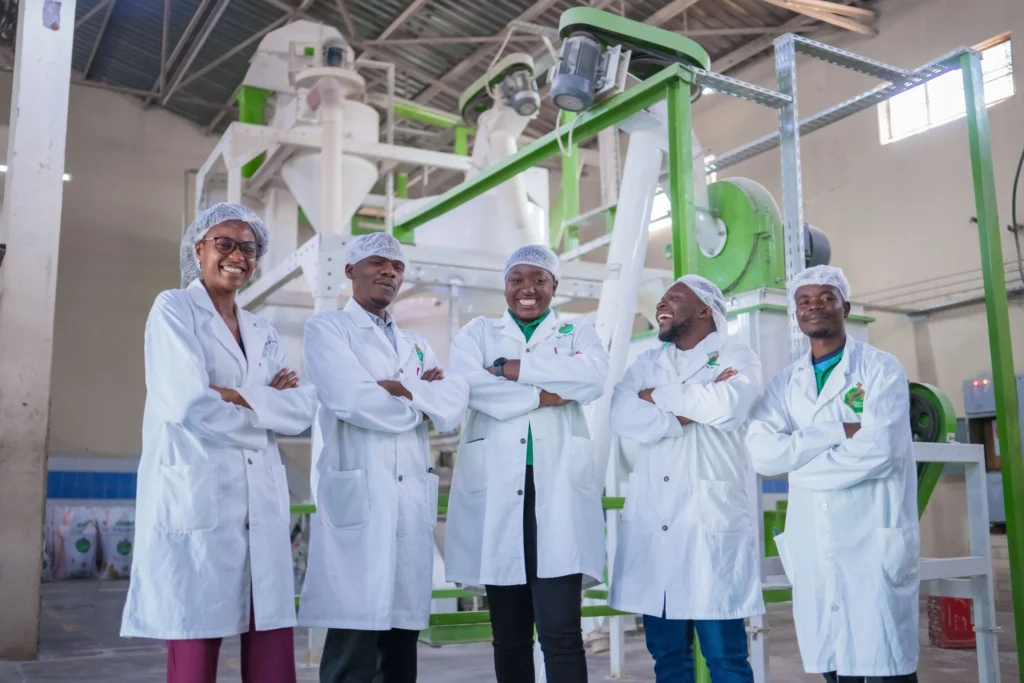
Ziweto team in a past visit
Today, Ziweto operates a network of 30 agrovet shops across Malawi, supported by its own feed mill and a commercial chicken hatchery. Every shop has a trained vet technician behind the counter. Beyond the storefronts, 356 community lead farmers act as last-mile distributors, extending Ziweto’s reach to more than 200,000 smallholders every year. The business is listed on the stock exchange in Mauritius to unlock the patient equity capital required for this scale.
Most people look at a chain of 30 shops and assume the hard part was the logistics or the inventory capital.
It was not.
The real realisation came when Victor tracked their foot traffic. Before 2021, Ziweto was logging around 50,000 shop visits a year. Today, they record over 100,000 annual visits. When you look at those visits closely, you realize farmers do not walk five kilometers just to buy a bag of feed or a bottle of dewormer. They walk that distance because the vet technician behind the counter is the only person in their district who will look at their animal, diagnose the problem, and explain how to fix it before asking for a single kwacha.
Victor thought he was building a retail distribution company. What he actually built was a trust infrastructure for rural Africa. Once a farmer trusts the advice behind the counter, the supply chain simply becomes the mechanism that delivers on that promise.